
If your roof is giving you trouble, the very first question running through your mind is probably this: Do I repair it or replace the whole thing? The honest answer is that it depends on several factors specific to your roof, your home’s age, the type of damage you are dealing with, and yes, your budget. Getting this decision wrong in either direction costs you money. Repair a roof that truly needs replacement, and you will be calling a contractor again in six months. Replace a roof that only needed a targeted fix, and you spent tens of thousands of dollars you did not have to.
This guide is written specifically for homeowners in Pasadena, California, where the combination of intense summer heat, seasonal Santa Ana winds, periodic heavy rainfall, and a housing stock full of historic Craftsman bungalows and Spanish Colonial Revival homes creates roofing challenges that are genuinely different from what you will read in a generic nationwide article. By the end, you will know exactly how to evaluate your situation and walk into any contractor conversation with confidence.
What Is the Actual Difference Between Roof Repair and Roof Replacement?
Before weighing the options, it helps to be clear on what each one actually involves.
A roof repair addresses a specific, defined problem on part of your roof. That might be a few cracked or missing shingles, a failed flashing around a chimney or skylight, a small section of damaged underlayment, or a localized leak above one room. The rest of the roof system stays untouched. Repairs are typically completed in a day or less and cost a fraction of what a full replacement runs.
A roof replacement is the complete removal of your existing roofing system down to the deck, followed by the installation of new underlayment, new materials, and all the components that go with them. Depending on the size of your Pasadena home, this is a multi-day project and a significant financial investment. It is also, when the time is truly right, the smarter and cheaper long-term decision.
The word that bridges both of these options is condition. Everything that follows comes back to honestly assessing the condition of your roof.
The 5 Factors That Determine Repair or Replacement
1. The Age of Your Roof
Roof age is the single most important variable in this decision. Here is why: the older a roof gets, the more its materials have degraded across the entire surface, not just in the visible damaged spots. Repairing one section of a roof that is already near the end of its lifespan is a bit like replacing one bald tire on a car where the other three are just as worn out.
Here are the general lifespan benchmarks for the roofing materials most commonly found on Pasadena homes:
Asphalt shingles, which are the most common residential roofing material throughout Southern California, typically last between 20 and 25 years. Three-tab shingles sit on the lower end of that range while architectural shingles push toward the higher end.
Clay and concrete tile roofs, which are extremely common in Pasadena given the city’s Spanish Colonial Revival and Mediterranean architectural heritage, have a significantly longer lifespan. Well-maintained clay tile roofs can last 50 years or more, though the underlayment beneath those tiles typically needs attention after 20 to 30 years, even when the tiles themselves look fine.
Wood shake roofs, which appear on many of Pasadena’s historic Craftsman homes in neighborhoods like Bungalow Heaven, generally last 20 to 30 years with proper maintenance. California’s fire codes have significantly impacted wood shake viability in recent years, and homes in Pasadena’s Wildland Urban Interface zones face specific material requirements.
Metal roofs can last anywhere from 40 to 70 years, depending on the type of metal and the quality of installation. They are increasingly popular among Pasadena homeowners interested in energy efficiency and longevity.
Flat roofing systems, common on commercial properties and some contemporary homes in areas like Playhouse Village and Madison Heights, typically require attention every 10 to 20 years, depending on the membrane type.
The practical rule: if your asphalt shingle roof is 15 years old or younger and the damage is localized, repair is almost always the right call. If it is past 20 years, replacement deserves serious consideration even when the current problem seems minor, because the rest of the roof likely does not have much life left, regardless.
2. The Extent and Location of the Damage
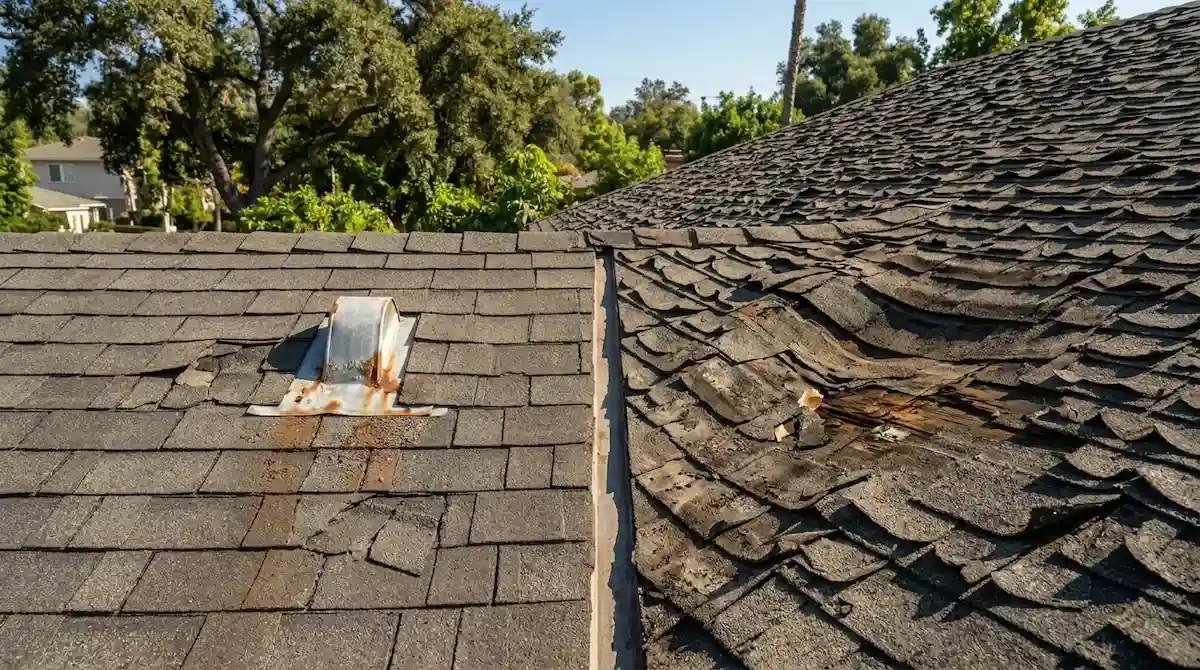
A single storm can produce dramatically different outcomes on the same roof. A few wind-lifted shingles on one slope with a solid deck underneath is a repair situation. Wind-damaged shingles across three slopes with granule loss visible everywhere, and soft spots in the deck are a replacement situation.
Roofing professionals commonly use a percentage threshold when evaluating damage. When more than 25 to 30 percent of a roof’s surface shows damage or significant wear, replacement typically becomes more cost-effective than piecing together repairs across multiple sections. Anything under that threshold and you are generally still in repair territory, assuming the roof is not already near the end of its lifespan.
Location of damage matters too. Damage around flashing points, which are the metal strips that seal roof transitions around chimneys, vents, skylights, and walls, is very often a repair issue rather than a full replacement trigger. Flashing fails before shingles do in many cases, and replacing or resealing flashing is a relatively affordable fix that stops leaks without touching the rest of the roof system.
Structural damage is a different story entirely. If the roof decking, which is the plywood or OSB layer that sits beneath your shingles or tiles, has become soft, rotted, or compromised by long-term moisture infiltration, that is a sign that water has been getting in for a long time. At that point, you are dealing with a systemic issue that repairs cannot fix.
3. How Many Times Has It Been Repaired?
There is a concept in roofing that contractors sometimes call the repair treadmill, and it is one of the clearest signals that a replacement conversation needs to happen. If you have had the same roof repaired two, three, or four times in the past few years and leaks keep returning, usually in different locations, the roof is failing across its entire surface. Each repair treats a symptom rather than the underlying cause.
A helpful way to think about this financially: add up what you have spent on repairs over the last three to five years and compare it against what a replacement would cost. If you are approaching 30 to 40 percent of the replacement cost in repairs, you would have been better off replacing the roof earlier. Going forward from that point, continued repairs rarely make financial sense.
4. Your Plans for the Property
How long you intend to stay in your Pasadena home plays a role in this decision that does not get discussed enough.
If you are planning to sell in the next two to three years, the math on replacement changes. A new roof is a strong selling point in the Pasadena real estate market, where buyers for historic homes in Hastings Ranch, Linda Vista, and Garfield Heights are often paying significant prices and expect a home that is move-in ready. That said, a targeted repair that addresses the immediate visible issue can also satisfy a home inspector and a buyer in certain situations, particularly if the overall roof condition is documented as acceptable. A professional roof inspection and written report give you the information you need to make this call.
If you are staying in your home for the next 10 to 20 years, the calculus shifts toward replacement when the roof is aging. Paying for a quality replacement now means not dealing with the stress, inconvenience, and recurring expense of ongoing repairs during the years ahead.
Related: Top Signs Your Home Needs Immediate Roof Repair
5. The Cost Comparison Done Honestly
Pasadena homeowners often make their repair versus replacement decision based on the immediate sticker price without thinking about the cost per year of remaining protection. Here is a more honest way to think about it.
A roof repair that costs $1,200 and buys your roof five more years of functional life costs you $240 per year in protection. A full roof replacement that costs $18,000 and gives you 25 years of protection costs you $720 per year. In that scenario, the repair still wins on an annual basis.
Now flip the scenario. A repair that costs $1,200 and only buys two more years before the roof fails again costs you $600 per year. A replacement at $18,000 over 25 years costs $720 per year. Now they are essentially equal, and the replacement gives you certainty, better warranties, and no further repair bills during that period.
The point is not to do the math in a vacuum. It is to look at your specific roof’s age, condition, and likely remaining lifespan before deciding which option genuinely costs less over time.
Related: How Much Does a New Roof Cost in Pasadena, CA? (2026 Pricing Guide)
When Repair Is Almost Always the Right Answer
Certain situations are clear repair situations for Pasadena homeowners:
Your roof is less than 15 years old, and the damage is clearly localized to one section or one component, like a flashing or a small number of shingles.
A single storm event caused specific, identifiable damage to a portion of your roof while the rest of the surface remains in solid condition.
Your tile roof has cracked or slipped tiles caused by impact or foot traffic, but the underlayment beneath them is intact, and the rest of the tile field is in good shape. On Pasadena’s many tile roofs, this is an extremely common scenario, and replacement would be a significant overcorrection.
You have a leak above one room that traces back to a failed pipe boot, a cracked vent flashing, or a small gap in the underlayment near a valley. These are precision fixes, not whole roof problems.
When Replacement Is the Smarter Move
These situations strongly point toward replacement for most Pasadena homeowners:
Your asphalt shingle roof is over 20 years old and showing widespread granule loss, curling shingles, or multiple soft spots. The visible damage is just catching up to the invisible degradation that has already happened across the whole surface.
You are seeing water stains in multiple rooms, not just one area. Multiple leak points mean multiple failures, and a patchwork repair rarely holds for long.
Your roof has already been repaired two or more times, and the leaks keep returning. You are spending repair money on a roof that is going to need replacement anyway.
Your decking has been compromised by long-term moisture. Once the structural layer is involved, the scope of work required looks more like a replacement than a repair in any practical sense.
You are in one of Pasadena’s Wildland Urban Interface zones, and your current roof material does not meet California’s current Class A fire rating requirements. A replacement gives you the opportunity to bring the home into compliance, which may also benefit your homeowner’s insurance situation.
What About the 50 Percent Rule?
You may have heard contractors mention the 50 percent rule, which suggests that if a repair costs more than 50 percent of a replacement, you should just replace the roof. This is a reasonable guideline in many markets, but it is not a hard formula that applies in every situation. Roof age, the specific materials involved, and the scope of structural damage all need to be part of the calculation.
In Pasadena specifically, the cost of high-quality roofing materials and skilled labor means that replacement quotes can run quite high for larger historic homes. Getting a clear, itemized repair estimate and a clear replacement estimate from the same licensed contractor lets you compare them honestly rather than relying on a rough rule of thumb.
Pasadena Specific Considerations You Cannot Ignore
Pasadena is not a generic suburban market, and the roofing decisions homeowners make here carry some local context worth understanding.
The city’s architectural character means that roof material choices matter aesthetically and sometimes legally. Homes in Pasadena’s designated Landmark Districts or within HOA-governed neighborhoods may have restrictions on roofing materials. If a replacement is in your future, knowing those requirements before you start the project saves a significant amount of time and frustration.
Pasadena’s climate produces a specific kind of roof stress that homeowners underestimate. Summers regularly push temperatures past 100 degrees Fahrenheit in the San Gabriel Valley, and that prolonged UV exposure degrades asphalt shingles faster than the national average lifespan figures suggest. Meanwhile, the winter rainy season and occasional strong wind events from the northeast create a different set of stress on tile and flat roofing systems. A roof that looks acceptable in late summer can reveal its weaknesses quickly once the first significant rain arrives.
The proximity of northern Pasadena neighborhoods to the San Gabriel Mountains also means that debris accumulation, moss growth, and damage from falling branches are more common than they are in flatland neighborhoods. Regular inspections in areas like Hastings Ranch and Linda Vista tend to catch issues earlier, which is exactly what keeps a repair viable rather than letting problems compound toward a replacement.
While every roofing market has its own challenges, homeowners researching repair options in different regions often compare projects such as Roof repair Temecula, CA to better understand how climate, roof age, and material selection can influence repair versus replacement decisions.
Should You Get an Inspection Before Deciding?
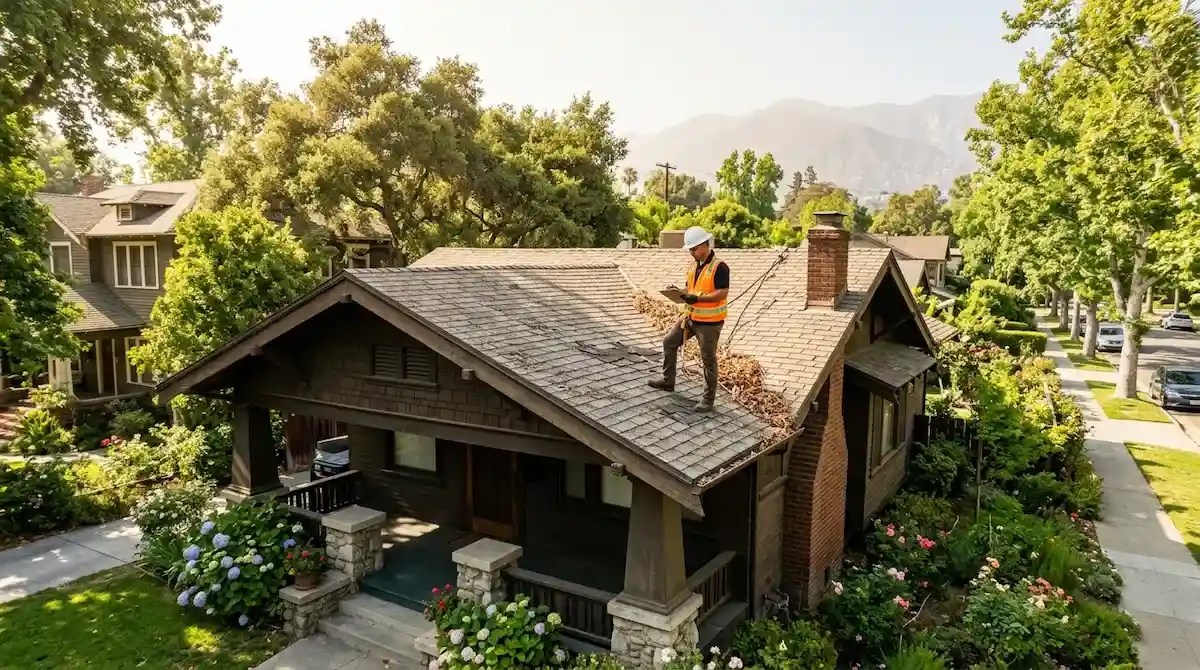
Yes, without exception. No amount of general information replaces an actual evaluation of your specific roof by a qualified professional. Surface appearances are genuinely misleading in roofing. What looks like a minor leak from inside your home can be traced back to a failed flashing that a $300 repair fixes. What looks like a few missing shingles from the street can reveal compromised decking once someone actually walks the roof.
A professional roof inspection gives you a documented picture of what is actually going on across the entire roof system, not just the one spot where water is currently getting in. That documentation is also useful if you plan to file a homeowner’s insurance claim for storm-related damage, which many Pasadena homeowners have done following Santa Ana wind events in recent years.
Make the Right Roofing Decision for Your Pasadena Home
Roof repair is the right call when the damage is localized, the roof has meaningful life remaining, and the rest of the system is genuinely solid. Roof replacement is the right call when the roof is aging, damage is widespread, repairs keep recurring, or the structural components have been compromised.
Neither option is universally better. The right decision is the one that is based on the actual condition of your specific roof, informed by a professional inspection, and evaluated honestly against both the short-term cost and the long-term value.
If you are in Pasadena and trying to figure out which path makes sense for your home, the smartest first step is a thorough inspection from a licensed local contractor who knows the specific materials, architecture, and climate conditions in the San Gabriel Valley. That inspection gives you real information instead of guesswork, and real information is what leads to a decision you will not regret.
Our team at Roof Repair Pasadena CA serves homeowners across Bungalow Heaven, Hastings Ranch, Linda Vista, Madison Heights, Playhouse Village, and Garfield Heights. We provide honest assessments and clear estimates so you can make the right call for your home and your budget. Call us today at (626) 828-0782 or schedule your free roof inspection.


