
If your Pasadena roof is leaking right now, here is what you need to do immediately: move valuables away from the water, place buckets under the drip, and call a licensed local roofing contractor as soon as possible. Every minute you wait allows water to travel further into your home’s structure, and in this region, that damage adds up faster than most homeowners expect.
This guide walks you through exactly what to do in the first hour, what common mistakes to avoid, and why Pasadena homes face a distinct set of roofing challenges that homeowners in other parts of Southern California simply do not deal with the same way.
Why Pasadena Roofs Are Especially Vulnerable
Most people picture Southern California as perpetually sunny, and for most of the year, Pasadena is exactly that. But sitting at the base of the San Gabriel Mountains creates a microclimate that puts local roofs through a lot more stress than the typical Los Angeles area home.
During summer, temperatures regularly push past 100 degrees Fahrenheit, and the UV exposure bakes roofing materials relentlessly. Asphalt shingles crack and curl. Clay and concrete tiles lose their sealant integrity. The underlayment beneath both weakens season by season. Then, from November through March, the San Gabriel Valley receives its heaviest rainfall, and all of that dried-out, heat-fatigued roofing material is suddenly asked to hold back sustained downpours.
Add to this the Santa Ana winds that arrive without much warning, lifting shingles, loosening flashing, and dropping debris onto rooftops. Many older Pasadena homes, particularly the beautiful Craftsman bungalows and Spanish Colonial Revival properties throughout neighborhoods like Bungalow Heaven, Madison Heights, and the Foothills, were built with roof systems that were never designed to handle decades of this kind of climate cycling.
When a roof finally gives way, it rarely does so dramatically. It starts small: a water stain on the ceiling, a drip near a light fixture, a soft spot in the drywall near a chimney. And that is exactly when you need to know what to do.
Step One: Protect the Interior Right Away
The first thing to understand is that a ceiling stain or an active drip is rarely directly below where the roof is actually breached. Water enters through a gap in the roofing material, then travels along rafters, decking, and insulation before finding a low point to drip through. That means what you see on your ceiling could be several feet away from the actual source.
With that in mind, your first job is to protect your belongings and your flooring, not to find the source yourself.
Move furniture, rugs, electronics, and anything else of value away from the affected area. Place buckets, large bowls, or any container you have under the drip. If the water is splashing out of the bucket, tie a piece of string from the ceiling to the bucket’s rim so the water travels down the string rather than bouncing onto the floor.
If there is bubbling or blistering on your ceiling paint, that means water has pooled behind it. Take a small nail or pin and gently puncture the lowest point of the bubble to let the water release in a controlled way into your bucket. This sounds counterintuitive, but it prevents a larger section of the ceiling from collapsing all at once under the weight of the collected water.
Turn off any lights or ceiling fans near the leak and do not flip them back on until a professional has confirmed the area is dry. Water and electrical wiring are a serious safety hazard, and this is not something to take lightly.
Step Two: Check the Attic If You Can Do So Safely
If you have attic access and can get there safely, do it. Bring a flashlight and look for where water is running or dripping. Follow the trail upward as far as you can. Look for dark wet spots on the decking, glistening on the rafters, or saturated insulation. Take photos of everything you see, because this documentation helps your roofing contractor trace the leak much faster and helps you immensely if you need to file a homeowner’s insurance claim.
Keep in mind that a bright flashlight can reveal water staining that has been building for weeks or even months before the interior leak became visible. Older homes in Pasadena often have multiple layers of roofing material laid over one another, which can trap moisture and hide damage for a long time before it breaks through.
Do not walk on ceiling joists that look wet or soft. Your safety comes before any investigation.
Step Three: Attempt a Temporary Exterior Patch Only If It Is Safe to Do So
Under no circumstances should you climb onto a wet, sloped roof. This advice applies universally, but it is especially relevant during Pasadena’s rainy season when rooftops are slick, and gutters are running fast.
If the rain has stopped and the roof has dried, and you are comfortable doing so, a temporary patch using roofing cement or a heavy-duty plastic tarp can slow additional water intrusion until a professional arrives. A 6-mil-thick polyethylene tarp weighted down at the edges with boards or sandbags can cover a damaged area effectively for several weeks. Roofing cement or butyl tape applied around cracked flashing, or a small puncture in the membrane, can also buy time.
If you are not comfortable on the roof at all, or if conditions are not safe, skip this step entirely and call for professional help. A temporary interior containment setup is sufficient to protect your home until a contractor can get there.
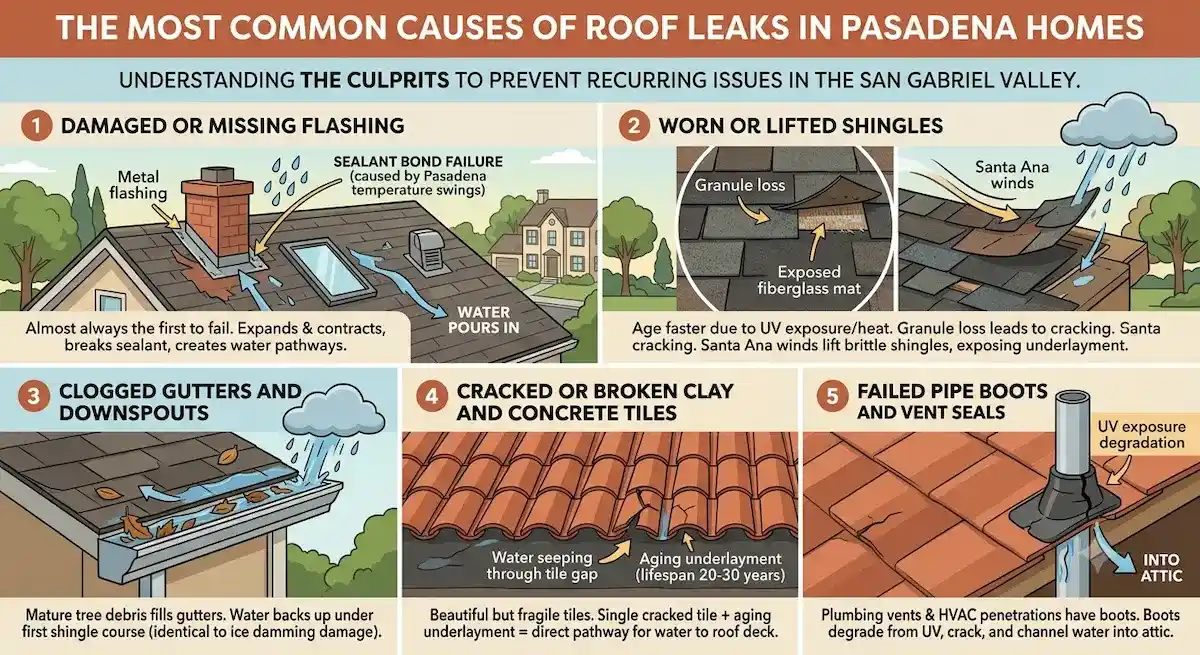
The Most Common Causes of Roof Leaks in Pasadena Homes
Understanding what caused your leak helps you have a more informed conversation with your roofing contractor and prevents the same problem from recurring. In Pasadena and the broader San Gabriel Valley, the most frequent culprits include the following.
Damaged or missing flashing:
Flashing is the metal or rubberized material installed around chimneys, skylights, vents, HVAC penetrations, and roof-to-wall transitions. It is almost always the first thing to fail. Pasadena’s temperature swings cause flashing to expand and contract repeatedly, eventually breaking the sealant bond. Once flashing lifts or cracks, water pours straight into the roof assembly.
Worn or lifted shingles
Asphalt shingles on Pasadena roofs age faster than in cooler climates because of relentless UV exposure and heat. Granule loss on shingles exposes the fiberglass mat underneath, which then cracks. Santa Ana winds peel up shingles that have become brittle, leaving the underlayment and decking fully exposed to rainfall.
Clogged gutters and downspouts:
Debris from the mature trees throughout Pasadena neighborhoods fills gutters quickly. When gutters overflow, water backs up under the first course of shingles along the eave, a problem known as ice damming in colder climates, but that causes identical damage here during heavy rain events. Regular gutter cleaning is one of the most cost-effective ways to prevent roof leaks.
Cracked or broken clay and concrete tiles:
Spanish-style and Mission-style homes throughout Pasadena are known for their beautiful clay tile roofing. But tile is only as watertight as the underlayment beneath it, and that underlayment typically has a lifespan of 20 to 30 years. A single cracked tile combined with an aging underlayment creates a direct water pathway into the roof deck.
Failed pipe boots and vent seals:
Every plumbing vent stack and HVAC penetration through your roof has a rubber or plastic boot around it. These degrade from UV exposure and eventually crack, creating a gap that channels water directly down the pipe and into your attic space.
What Happens If You Ignore a Roof Leak, Even a Small One
This is where many Pasadena homeowners make a costly mistake. The rain stops, the drip slows down, and life moves on. But water that has entered your roof assembly does not simply evaporate and disappear.
Wet roof decking begins to rot. Wet insulation loses its R-value and becomes a breeding ground for mold. Mold can take hold within 24 to 48 hours of sustained moisture exposure, and once it reaches the framing and drywall, remediation becomes a far more expensive project than a roof repair ever would have been. Water that travels along electrical wiring inside walls creates a fire and shock hazard. A small opening in your roof during one winter storm becomes a large failure point in the next one.
Catching a leak at the first drip and having it professionally repaired is almost always a fraction of the cost of what happens when you wait through another season.
Should You File a Homeowner’s Insurance Claim?
If your roof leak resulted from a sudden event, such as storm damage from a heavy rain system, wind damage from a Santa Ana event, or debris impact, your homeowner’s insurance policy may cover some or all of the repair cost. Document the damage thoroughly with photos and video before any temporary repairs are made. Note the date and weather conditions. Keep any receipts for emergency materials like tarps or buckets.
Contact your insurance carrier promptly, as most policies have reporting windows for storm-related claims. Your roofing contractor can often provide documentation that supports your claim and communicate directly with your adjuster about the scope of necessary repairs.
If the damage is the result of deferred maintenance rather than a sudden storm event, insurance typically will not cover it. This is another reason why staying on top of annual inspections and minor repairs pays dividends.
When to Call a Professional Roof Repair Contractor in Pasadena
The honest answer is that you should call a licensed Pasadena roofing contractor at the same time you are doing your interior containment steps. Emergency response is not just for dramatic situations. Even a minor active leak warrants professional attention because the visible damage is almost always just a fraction of what a trained eye will find during a proper inspection.
A qualified contractor will get on the roof safely, trace the leak to its actual source rather than just the visible symptom, check the surrounding area for secondary damage, and give you a clear, written assessment of what needs to happen. Look for a contractor who is licensed with the California Contractors State License Board (CSLB), carries general liability and workers’ compensation insurance, and can provide local references from Pasadena or San Gabriel Valley jobs.
Be cautious of storm chasers or unlicensed contractors who appear door-to-door after major rain events. Always verify a license before signing any agreement.
How to Prevent Future Roof Leaks in Pasadena
Prevention is straightforward, even if it requires some consistency. Schedule a professional roof inspection twice a year, ideally once in October before the rainy season begins and once in April after it ends. Have your gutters cleaned at least twice a year, more often if your property has large trees nearby. Address missing or cracked shingles and broken tiles immediately rather than watching them through another season. Seal all flashing penetrations and replace dried-out pipe boots before they fail completely.
If your Pasadena home has a flat or low-slope roof, which is common in mid-century modern properties and commercial buildings throughout the city, ensure that roof drains and scuppers are cleared before every rain event. Flat roofs can accumulate standing water quickly, and even a small unaddressed seam failure can become a significant leak under ponded water pressure.
Finally, know the age of your roof. Asphalt shingles in Pasadena’s climate typically last 20 to 25 years under normal conditions. Clay and concrete tile systems can last 50 years or more when the underlayment is replaced on schedule. A roof that is approaching the end of its expected lifespan deserves a thorough professional assessment before the next rainy season arrives.
You might also find these Helpful:
- Top Signs Your Home Needs Immediate Roof Repair
- The Most Common Causes of Roof Leaks in Pasadena, CA Homes
- Common Roofing Problems in Pasadena Homes and How to Fix Them
Frequently Asked Questions About Roof Leaks in Pasadena
How quickly can a roof leak cause serious damage?
Mold can begin forming in wet insulation and wood within 24 to 48 hours. Structural damage to roof decking and framing can develop over a single season if a leak goes unaddressed. The sooner you act, the less expensive the outcome.
Can I repair a roof leak myself?
Interior containment steps are something most homeowners can handle safely. Exterior repairs on a sloped roof require proper safety equipment, experience, and an understanding of roofing materials and water paths. Improper repairs can actually make the leak worse by directing water somewhere else or introducing new gaps. A licensed professional roof repair contractor in Pasadena is always the right call for anything beyond temporary interior protection.
What is the most common location for roof leaks?
Flashing points around chimneys, skylights, vent pipes, and roof valleys account for the majority of residential roof leaks. These transition areas are under the most movement and stress, and they are the first places an experienced inspector will examine.
Is roof repair covered by insurance in California?
It depends on the cause. Sudden storm damage is generally covered. Wear and tear, and deferred maintenance are generally not. Document everything and report the incident to your carrier promptly to understand your specific coverage.
How much does roof leak repair cost in Pasadena?
Minor repairs, such as flashing replacement or a small number of shingles, typically range from a few hundred to a few thousand dollars. More extensive repairs involving decking replacement, large areas of tile work, or waterproofing systems can run higher. A reputable roofing contractor will provide a written estimate after a proper inspection.
A leaking roof is stressful, but it is manageable when you know what to do in the first hour and who to call. If you are dealing with an active leak anywhere in Pasadena or the surrounding San Gabriel Valley area, take those immediate protective steps, document the damage, and get a licensed professional on the phone today. The right response now protects your home, your family, and your investment for years to come.
Ready to Stop That Leak? Call Pasadena’s Trusted Roof Repair Team
Do not let a small drip turn into a costly disaster. Whether you are dealing with an active leak right now or want a professional inspection before the next storm hits, our team at Roof Repair Pasadena CA is here to help. We serve homeowners throughout Pasadena and the San Gabriel Valley with fast response times, honest assessments, and repairs built to last through every season this region throws at your roof. Call us today at (626) 828-0782 to schedule your free roof inspection and get the peace of mind your home deserves.


