
Roof leaks in Pasadena, CA, happen more often than most homeowners expect, and the climate here deserves a large share of the blame. The San Gabriel Valley sits in a unique weather pocket where long, scorching summers push temperatures well above 100°F, UV radiation beats down relentlessly, and then winter arrives with concentrated, heavy rainfall events that can drop several inches of rain in just a matter of days. That cycle is genuinely brutal on roofing systems and creates vulnerabilities that would not develop nearly as quickly in more moderate climates. Whether your home has an asphalt shingle roof, a clay tile roof, a flat or low-slope membrane, or an older built-up system, understanding where leaks originate is the first step toward protecting your home before water damage sets in.
Why Pasadena Homes Are Particularly Vulnerable to Roof Leaks
Before diving into individual causes, it helps to understand the environmental context. Pasadena and the surrounding areas of Altadena, San Marino, and Arcadia experience what is broadly called a Mediterranean climate. Summers are long, dry, and intensely hot. That heat dries out roofing materials, causes asphalt shingles to lose the oils that keep them flexible, and causes thermal expansion and contraction that eventually wears down seals and fasteners.
Then winter arrives. Pasadena receives roughly 20 inches of rainfall annually, and most of it falls between November and March. Atmospheric river events, the kind that drench the entire region in a short window, are the norm, not the exception. When that level of moisture hits a roof that has spent months baking under the California sun, every small crack, every compromised seal, and every clogged drainage point becomes a potential entry point for water.
Add in the Santa Ana winds that roll through the region in fall and early winter, and you have a recipe for accelerated roof wear that requires attention more regularly than many homeowners realize.
1. Damaged or Deteriorating Flashing
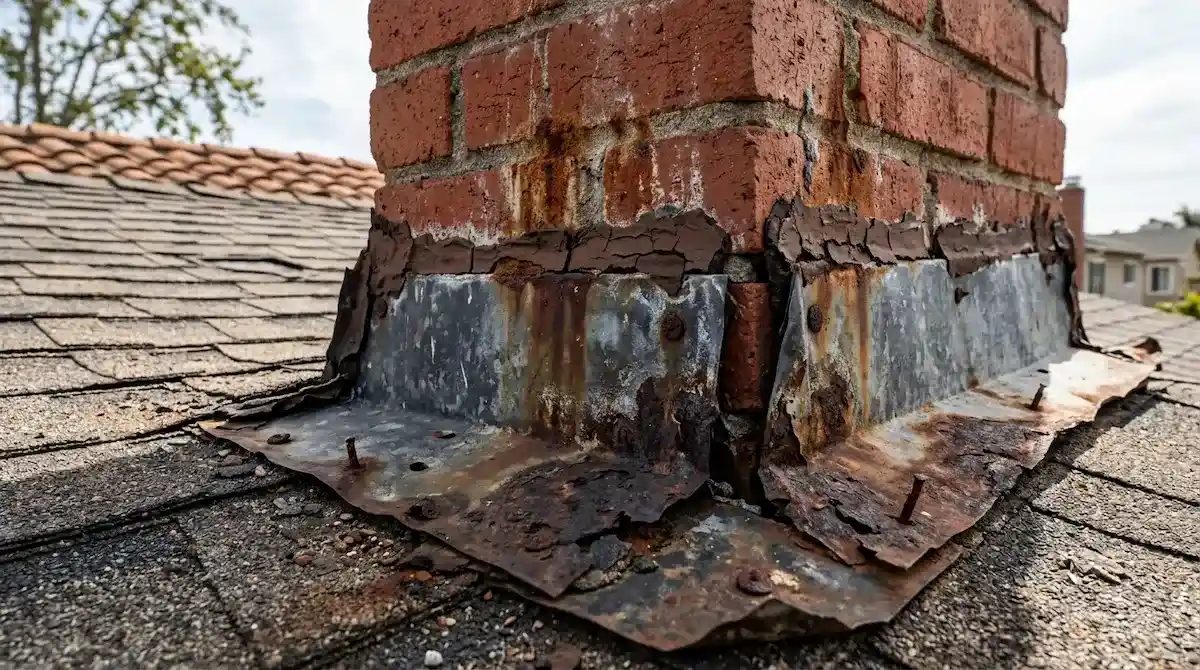
Flashing is one of the most important and most overlooked components of any roofing system. It refers to the thin metal strips, typically galvanized steel or aluminum, installed at transition points on the roof: around chimneys, skylights, vents, dormers, and along the edges where the roof plane meets a vertical wall. Its entire job is to redirect water away from these vulnerable seams and toward the drainage system.
In Pasadena’s climate, flashing is under constant stress. Summer heat causes the metal to expand. Cool nights and winter temperatures cause it to contract. Over the years, this repeated movement loosens fasteners, pulls the flashing away from its original position, and causes the sealant beneath and around it to crack and crumble. Once that seal breaks, water has a direct and often hidden path into the roof assembly.
Chimney flashing failures are among the most common service calls for roof repair in Pasadena. The intersection of brick, mortar, and metal creates multiple seam points, each of which can fail independently. Skylight flashing is another frequent culprit, particularly in older Pasadena Craftsman and Spanish revival homes where skylights may not have been installed with modern waterproofing standards. If you notice a water stain near a chimney or below a skylight, flashing should be your first suspect.
2. Aged or Sun-Damaged Roofing Materials
Asphalt shingles contain petrochemical oils that give them flexibility and weather resistance. Under normal conditions, a quality shingle roof lasts 25 to 30 years. In Pasadena, the combination of UV exposure and triple-digit summer temperatures accelerates that aging process significantly. Shingles begin to lose their granule coating, which exposes the raw asphalt beneath to direct sunlight. That asphalt dries out, becomes brittle, and eventually cracks. Once cracking occurs, water can seep through during rainfall and work its way into the underlayment and roof deck.
Clay and concrete tile roofs, common on Spanish colonial and Mediterranean style homes throughout Pasadena, hold up better under UV exposure, but they are not immune. Tiles can crack from thermal stress, from foot traffic during maintenance visits, or simply from age. A cracked tile on its own might not cause an immediate leak if the underlayment beneath it is still intact, but once the underlayment ages out as well, those cracked tiles become active entry points.
Homeowners often do not notice this type of deterioration from the ground. The roof can look intact from the street while the material itself has lost most of its weather-resistance capability. This is why periodic inspections by a licensed roofing contractor matter, particularly as a roof approaches the 15 to 20 year mark.
3. Clogged Gutters and Roof Valleys
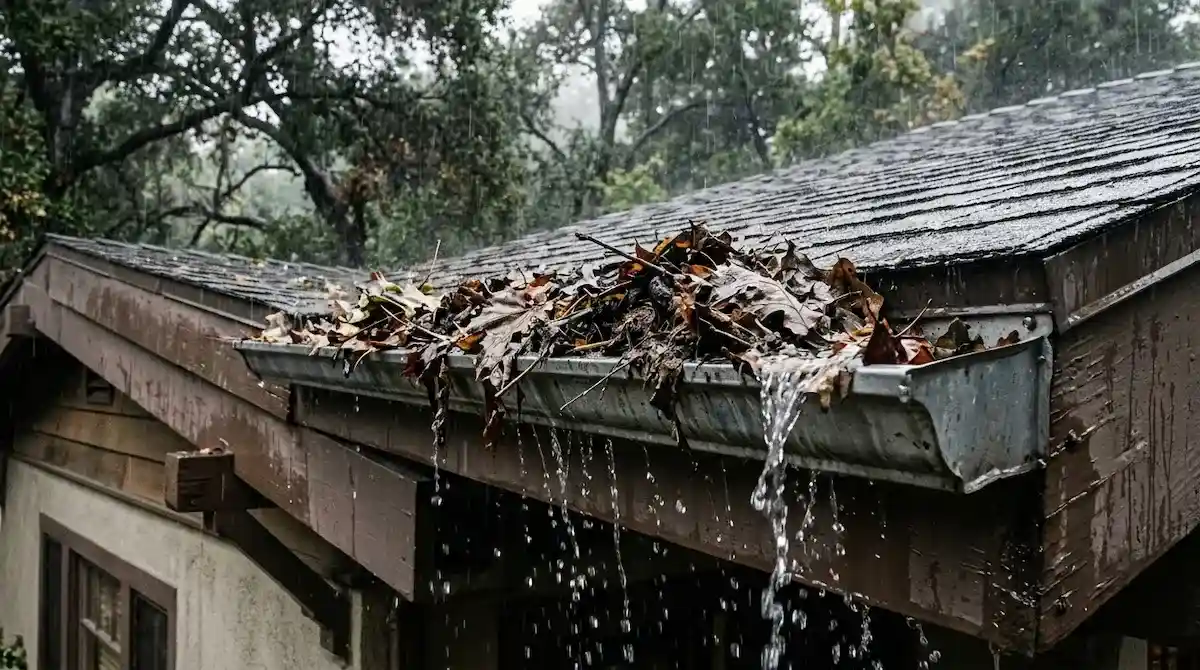
Pasadena is a beautifully tree-lined city. The mature oaks, sycamores, and jacarandas that shade neighborhoods like Bungalow Heaven, Chapman Woods, and the Arroyo Seco corridor are also consistent contributors to blocked gutters and drainage issues. Leaves, twigs, seed pods, and debris accumulate in gutters throughout the year. When the rainy season arrives, that debris turns into a dam.
Blocked gutters prevent water from moving off the roof efficiently. Water backs up, spills over, and in some cases gets pushed back under the shingle or tile layer at the eave line. Over time, that backed-up moisture causes wood rot in the fascia and soffit, degrades the underlayment, and creates conditions for mold growth inside the attic and wall cavities.
Roof valleys present a related problem. A valley is the V-shaped channel formed where two roof planes meet. It carries a concentrated stream of water during rainfall, more water than any flat section of the roof, and it directs it toward the gutters. If the valley flashing is damaged, improperly installed, or if debris has collected there and is impeding drainage, water will pool and eventually find a path through.
Cleaning gutters at least twice a year, and after any significant windstorm, is one of the simplest and most cost-effective ways Pasadena homeowners can reduce their leak risk.
4. Failed Pipe Boots and Roof Vent Seals
Every roof has penetrations. Plumbing vent stacks, HVAC flues, electrical conduits, and exhaust vents all pass through the roof plane, and each one requires a seal to keep water out. The most common seal is a pipe boot, a rubber or metal collar that wraps around the penetration at the roof surface.
Rubber pipe boots degrade faster than almost any other roofing component, especially under prolonged UV exposure. In Pasadena’s sun, a rubber boot that should last 15 years may start cracking at the collar within 8 to 10 years. Once that rubber splits, water channels directly into the roof deck with every rainfall. Because pipe boots are often small and blend into the roof surface, homeowners rarely notice the failure until a water stain appears on an interior ceiling below.
Metal vent covers face a different version of the same problem. The sealant used around their base dries out, shrinks, and pulls away. What was once a watertight connection becomes a gap that invites water intrusion every time it rains.
5. Improper or Insufficient Attic Ventilation
This one surprises many homeowners because it is not a direct penetration or physical crack in the roofing material. Poor attic ventilation causes roof leaks in a more indirect but equally damaging way. When hot air builds up in the attic during summer, it accelerates the deterioration of the roof deck and shingles from the inside. In winter and during the occasional cold snap in the San Gabriel Valley foothills, temperature differentials between the warm attic air and cold roof surface can create condensation. That moisture accumulates in the insulation, on the wood framing, and on the underside of the roof deck.
Over time, that trapped moisture causes wood rot, weakens structural components, and creates an environment where mold takes hold before any exterior leak is even visible. A roofing contractor or home inspector assessing a leak in an older Pasadena home will often find that attic moisture has been silently working through the structure for a long time before the first visible stain appears inside.
6. Santa Ana Wind Damage
The Santa Ana winds arrive in late fall and early winter, often just before or during the first rain events of the season. Gusts can exceed 60 miles per hour in foothill communities like Altadena and La Canada Flintridge, and the force is enough to lift shingle tabs, shift clay tiles, and send tree branches onto roofs.
The insidious aspect of wind damage is that it is not always obvious from the ground. A shingle that has been lifted and partially re-seated by the wind looks intact visually, but has broken its adhesive seal. That compromised shingle will perform normally in light rain and then let water in during the next heavy storm. Tile roofs can sustain hairline fractures from impact that are invisible from street level but allow water penetration.
After any significant Santa Ana event, a brief inspection, either personally from a safe vantage point or by a roofing professional, is a smart precaution before the rainy season gets underway.
7. Age and Wear on Flat or Low-Slope Roofs
Many older homes and bungalows in Pasadena feature flat or low-slope roof sections, as do detached garages, additions, and patio covers. These roofing systems behave fundamentally differently from pitched roofs. Water does not rush off the surface; it lingers, which means any small failure in the membrane or sealant has more opportunity to allow penetration.
Built-up roofing and modified bitumen systems, common on older Pasadena structures, have a finite lifespan and are susceptible to blistering and cracking under heat cycling. TPO and EPDM membranes on more modern flat roofs hold up better, but their seams and termination points still require periodic inspection and maintenance. Drain clogs on flat roofs are also a serious concern: a blocked interior drain can cause water to pond, adding weight and dramatically increasing the pressure on the membrane.
8. Previous Patchwork and Improper Repairs
This is a cause that does not get discussed enough. Many leaks in Pasadena homes, particularly those that have changed hands multiple times, originate at spots where a previous owner or an unlicensed contractor attempted a repair using roofing cement, caulk, or mismatched materials. These quick fixes tend to fail under the stress of real storm conditions, and when they fail, they often create a more complicated repair situation than the original problem would have been.
A blob of roofing cement over a cracked tile may hold for a season or two. But when Pasadena gets hit with an atmospheric river event, the pressure of sustained heavy rain exposes every weak point in that makeshift seal. By the time a professional arrives to diagnose the leak, there may be layers of old patchwork obscuring the actual source of water intrusion.
Warning Signs That Should Not Be Ignored
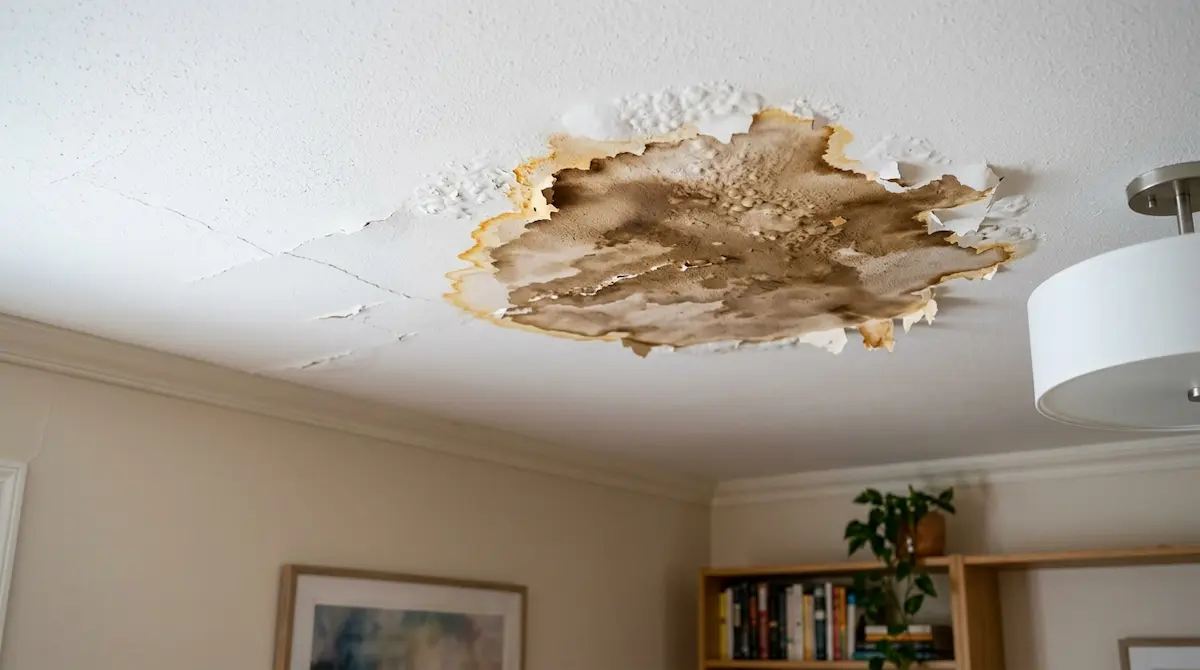
Even when you cannot see the roof directly, your home will usually give you early signals that something is wrong. Water stains on interior ceilings or walls, particularly those that appear after rain, are the most obvious indicator. Stains that are brown or yellowish at the edges and dry to the touch during fair weather suggest a leak that is wetting and drying with the rain cycle.
Soft or spongy spots on the ceiling drywall indicate that moisture has been present long enough to saturate and weaken the material. Musty odors in the attic or upper rooms suggest mold growth, which almost always points to a moisture source. Granules collecting in gutters or at downspout exits indicate that asphalt shingles are shedding their protective coating and nearing the end of their useful life.
When to Call a Roof Repair Professional in Pasadena
Some maintenance tasks, like cleaning gutters or visually inspecting the roof from the ground, are reasonable homeowner responsibilities. But the moment water is entering your home, the situation calls for a licensed roofing contractor who understands Pasadena’s specific climate challenges, local building codes, and the common roof types found throughout the city.
Attempting to trace and repair a leak without professional experience often leads to fixing the visible symptom while the actual source continues to cause hidden damage. Water travels. The stain on your ceiling may be three feet from the point where rain actually entered the roof assembly.
Roof repair in Pasadena, CA, is most effective when it addresses the root cause thoroughly, uses materials rated for Southern California’s UV and heat conditions, and meets the requirements of the California Building Code. Working with a local contractor who knows the neighborhood, the typical home styles from the craftsman bungalows of Madison Heights to the hillside estates above the Rose Bowl, and the seasonal patterns of the San Gabriel Valley, puts you in the best position to protect your home for the long term.
If You Found this Guide Helpful, You May Also Want to Read:
- Top Signs Your Home Needs Immediate Roof Repair
- How Long Does Roof Repair Take in Pasadena, CA?
- Roof Repair vs. Roof Replacement: How to Make the Right Decision
- Common Roofing Problems in Pasadena Homes and How to Fix Them
- How Much Does a New Roof Cost in Pasadena, CA? (2026 Pricing Guide)
- How to Choose a Licensed Roofing Contractor in Pasadena Without Getting Scammed
Final Thoughts
Roof leaks do not appear without reason. In Pasadena, the causes are predictable: heat-degraded materials, flashing failures at chimneys and skylights, clogged gutters and valleys, failed vent seals, wind damage from Santa Ana events, and moisture issues compounded by poor attic ventilation. Understanding these causes gives you the ability to prioritize maintenance, spot early warning signs, and make informed decisions about repairs before a small problem becomes a major structural issue.
If your roof is showing any of the warning signs described above, do not wait for the next rainstorm to confirm your suspicions. A professional inspection is far less expensive than the water damage, mold remediation, and structural repairs that result from a leak left unaddressed.
Ready to Stop That Leak Before It Gets Worse?
If your Pasadena home is showing any signs of a roof leak, whether it is a fresh water stain on the ceiling, missing shingles after a windstorm, or a roof that has not been inspected in years, now is the time to act. Water damage moves fast, and repairs only get more expensive the longer the problem sits. Our team specializes in roof repair in Pasadena, CA, and knows exactly what local homes face season after season. Contact us today for a professional roof inspection and let us find the source of your leak before the next storm arrives.
Call us now at (626) 828-0782 or schedule your free estimate online and protect your home with a repair done right the first time.


