
If you own a home in Pasadena, your roof is quietly fighting one of the harshest environments in Southern California. Between summer temperatures that push rooftop surfaces past 150°F, seasonal Santa Ana winds that gust above 50 mph, intense UV exposure almost year-round, and winter rainstorms that arrive fast and heavy, Pasadena roofs take a beating that most other California markets simply do not see.
The frustrating part? Most of the damage happens slowly and silently. By the time you notice a stain on your ceiling or a bubble in your drywall, water has usually been working its way in for weeks or months. This guide breaks down the most common roofing problems in Pasadena homes, what causes them specifically in this climate, how to spot them early, and what the fix actually looks like.
1. Cracked or Displaced Clay and Concrete Tiles
Pasadena’s Spanish Colonial, Mediterranean Revival, and Craftsman-style homes are part of what makes the city so architecturally distinctive. Tile roofs come with the territory. They are durable, fire-resistant, and beautifully suited to the local climate. But they are not indestructible.
Clay and concrete tiles crack for several reasons. Foot traffic during maintenance or solar panel installation is one of the most common culprits. Thermal expansion from extreme heat cycles in summer also stresses tiles over time. Seismic activity, which Pasadena is no stranger to, given its proximity to active fault lines, can cause tiles to shift or crack in ways that are invisible from the ground but wide open to rainwater above.
The real problem is that a single cracked or slipped tile does not announce itself. Water slips underneath the tile, sits on the underlayment below, and if that underlayment is old or already compromised, it seeps through to the roof deck and the structure beneath it. Many homes in Pasadena have original underlayment that predates modern materials, and it can fail before the tile itself shows any visible wear.
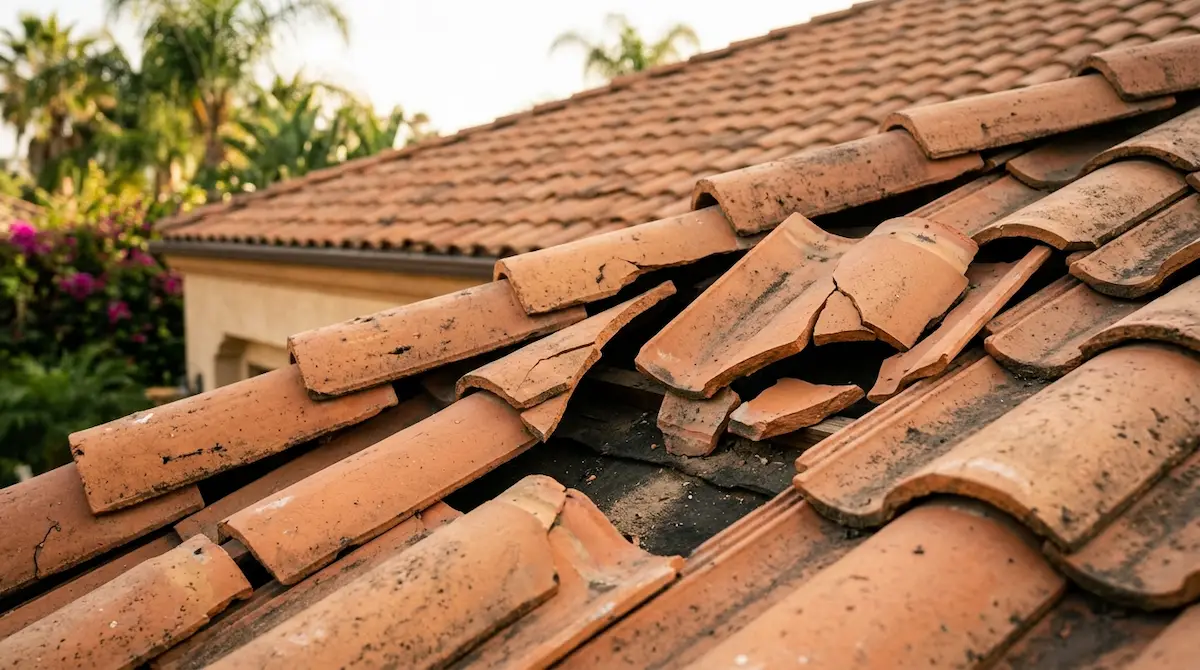
What to look for: Dark staining on interior ceilings, particularly after rain. Tiles that look slightly out of alignment when viewed from the ground or a second-floor window. Moss or algae clustering in one area can signal persistent moisture under a damaged tile.
The fix: Individual cracked tiles can be replaced without touching the surrounding roof. A licensed roofer will remove the damaged piece, inspect the underlayment beneath it, replace or patch the underlayment if needed, and install a matching tile. If the underlayment is aging across a larger section, it makes sense to address that during the same visit rather than return repeatedly for similar repairs.
2. Roof Leaks Around Flashing
Flashing is the metal material installed at every point where your roof meets a vertical surface, such as a chimney, a skylight frame, a dormer wall, or a plumbing vent. Its job is simple: redirect water away from those joints so it cannot find a path inside. When flashing fails, water finds exactly the path it is looking for.
In Pasadena, flashing takes abuse from all directions. Summer heat causes it to expand. Winter cold contracts it. Santa Ana winds can loosen fasteners. Heavy rain tests every seam. Over time, the caulking and sealant around flashing dries out, cracks, and pulls away from the surface. On older homes throughout Madison Heights, Hastings Ranch, and Bungalow Heaven, flashing that has never been replaced is often one inspection away from causing a serious water intrusion event.
What to look for: Water stains on interior walls or ceilings that appear near a chimney or skylight. Rust streaks running down exterior walls below roof joints. Visible gaps or peeling sealant when viewed up close along the roof edges.
The fix: Minor flashing issues often come down to resealing, which a roofing professional can complete quickly during a routine inspection. More significant failures require reflashing, meaning the old material is removed, the area is resealed to the roof deck and structure, and new metal flashing is installed with fresh sealant over every seam. This is not a DIY job because improper installation typically creates more leak points than it solves.
3. Granule Loss and UV Damage on Asphalt Shingles
Pasadena sits at the edge of the San Gabriel Valley, where summer temperatures regularly top 100°F and rooftop surfaces can hit 160°F or more on a clear afternoon. For asphalt shingles, this level of sustained UV exposure is genuinely punishing.
Asphalt shingles are coated in granules, small ceramic or mineral particles that protect the underlying asphalt from UV radiation and heat. As those granules shed, the asphalt layer beneath is exposed directly to the sun. It dries out, becomes brittle, and starts to crack. What might have been a 25-year shingle in a coastal California neighborhood often shows significant degradation in 15 to 18 years in Pasadena’s inland heat.
Inadequate attic ventilation makes this problem worse. When hot air becomes trapped in the attic, it superheats the roof deck from below; at the same time, the sun is baking it from above. The shingles deteriorate faster, and the structure beneath them does too.
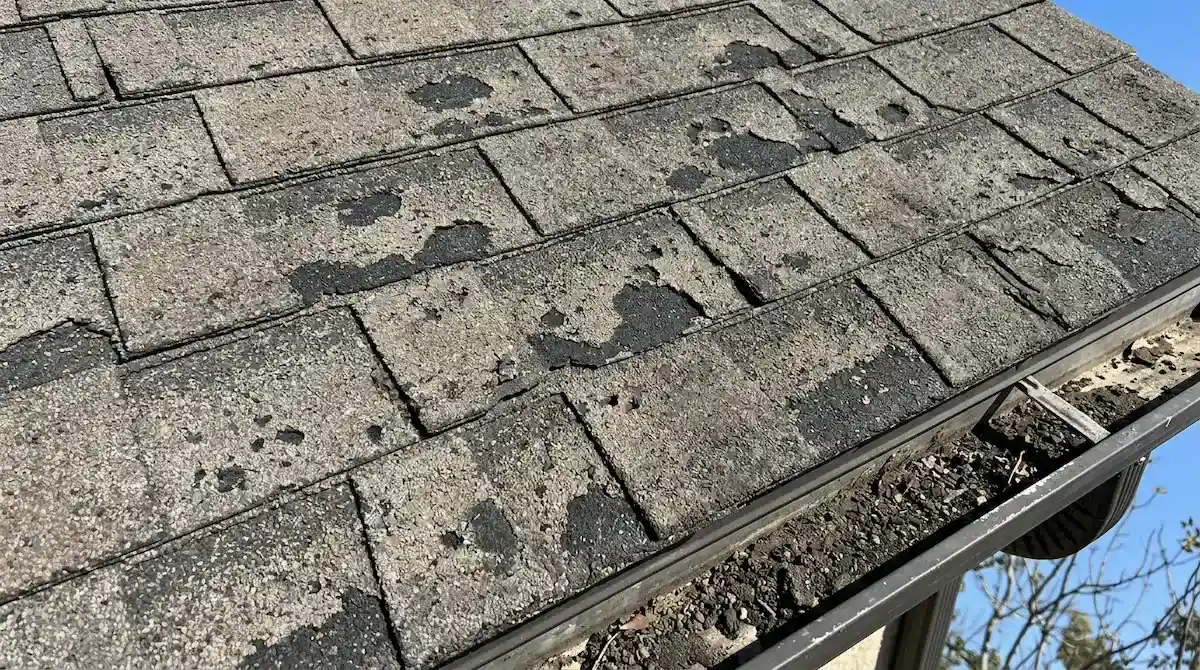
What to look for: Dark grit accumulating in your gutters or at the base of your downspouts after rain. Shingles that look faded, patchy, or have a rough, uneven texture. Curling or cupping at shingle edges.
The fix: Granule loss is not repairable on a shingle-by-shingle basis for large sections. If the damage is widespread, a roof replacement is typically the right answer. However, if the loss is isolated to a small area from a specific impact or installation flaw, individual shingle sections can be replaced. Addressing attic ventilation at the same time protects whatever roofing material goes on top. A proper ventilation system using ridge vents and soffit vents keeps attic temperatures in check and significantly extends the life of the new roof.
4. Standing Water and Drainage Failures on Flat or Low-Slope Roofs
Many of Pasadena’s mid-century modern homes and some Spanish Colonial properties feature flat or low-slope roofs. These roof systems are perfectly functional when properly maintained, but they require a different kind of attention than pitched roofs.
Water is not supposed to pool on a flat roof for more than 48 hours after rain. When it does, the standing water adds weight to the roof deck, which was not designed to carry long-term, accelerates the breakdown of the waterproof membrane, and creates the conditions for algae and mold growth. Over time, the membrane develops blisters, splits, or pulls away at seams and edges. One hard rain season in Pasadena can push a neglected flat roof from a minor maintenance issue to a major structural problem.
Drainage failures on flat roofs usually come from clogged drains and scuppers, low spots that collect water rather than directing it toward drainage outlets, or membrane seams that have separated and created pathways for water to get underneath.
What to look for: Visible pooling after rain that does not drain within two days. Bubbling or blistering on the roof surface indicates water trapped beneath the membrane. Water stains on interior ceilings below the flat roof section, particularly near exterior walls.
The fix: Clogged drains can be cleared during a maintenance visit. Low spots may require a roofer to apply a leveling compound or restructure the drainage slope. Membrane splits and seam separations can be patched in isolated areas with compatible material, but a membrane nearing the end of its lifespan is often better served by a full replacement with a modern TPO or modified bitumen system that delivers better long-term waterproofing performance.
5. Wind Damage from Santa Ana Events
Santa Ana winds in the Pasadena area are not gentle gusts. Wind speeds regularly exceed 50 to 70 mph during major events, and they arrive dry and fast, often with little warning. For roofs that have any existing weakness, a single Santa Ana season can turn a small problem into a large one overnight.
The typical pattern of wind damage is not dramatic. Shingles do not usually fly off in sheets. Instead, edges lift just enough to break the seal between shingles. Ridge cap pieces shift slightly out of position. Flashing at the roof edges pulls back a fraction of an inch. None of this is visible from the driveway. All of it creates the opportunity for water to get in during the next rain.
On tile roofs, Santa Ana winds can dislodge individual tiles, particularly along ridgelines and at eave edges where tiles are most exposed. Older mortar-set ridge tiles are especially vulnerable because the mortar dries and cracks over time.
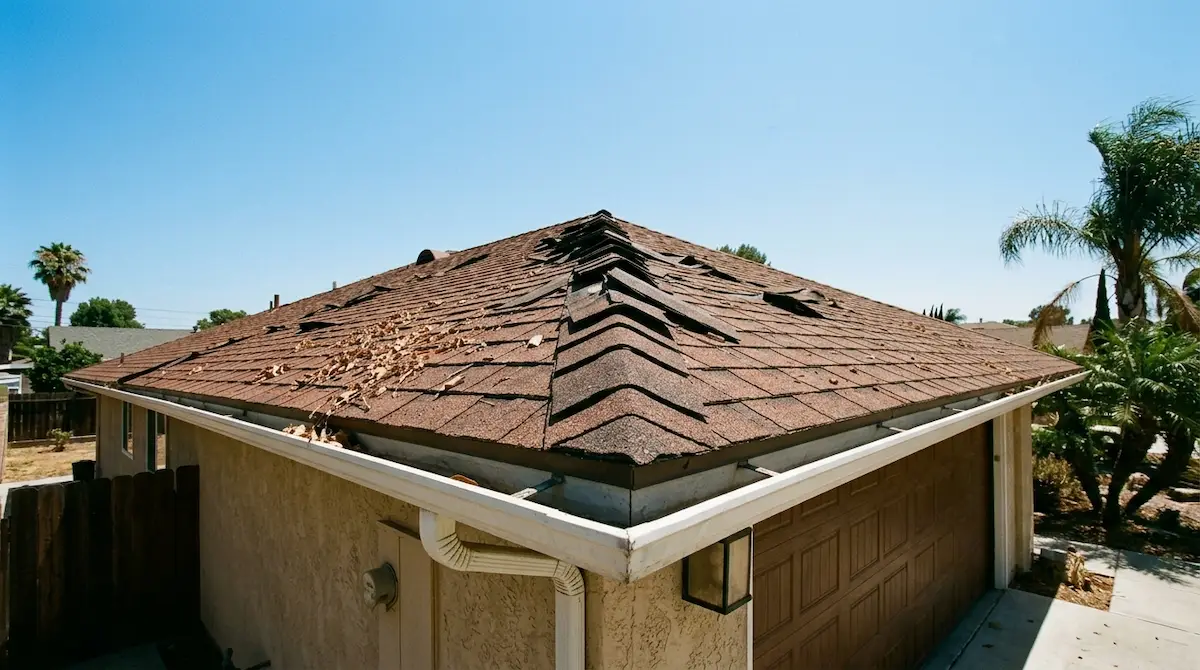
What to look for: After any significant wind event, do a ground-level walk around your home. Look for shingles on the ground, debris accumulation in valleys and gutters, or tiles that appear slightly misaligned. Indoors, check attic spaces for light coming through from above, which signals an opening in the roof.
The fix: Wind damage that is caught quickly is often inexpensive to repair. Re-nailing lifted shingles, resetting displaced tiles, and resealing exposed flashing are all straightforward repairs. The mistake most homeowners make is waiting until the next rain reveals a leak before calling a roofer. By then, water may have already reached the roof deck or insulation beneath, and the scope of the repair grows significantly.
6. Algae, Moss, and Biological Growth
You might think algae and moss are purely cosmetic issues. They are not. In Pasadena’s shaded hillside neighborhoods near the Arroyo Seco, in tree-lined streets throughout Linda Vista and Playhouse Village, biological growth on roofs is a legitimate maintenance concern that accelerates material deterioration if left unaddressed.
Algae typically shows up as dark streaking or black staining across shingles or tile surfaces. It thrives on moisture and the limestone filler used in many asphalt shingles. Moss goes further, actually growing root-like structures into the shingle surface and lifting edges to trap moisture beneath them. Both organisms hold water against the roof surface, which, in a climate that also sees intense summer heat, creates repeated expansion and contraction stress on roofing materials.
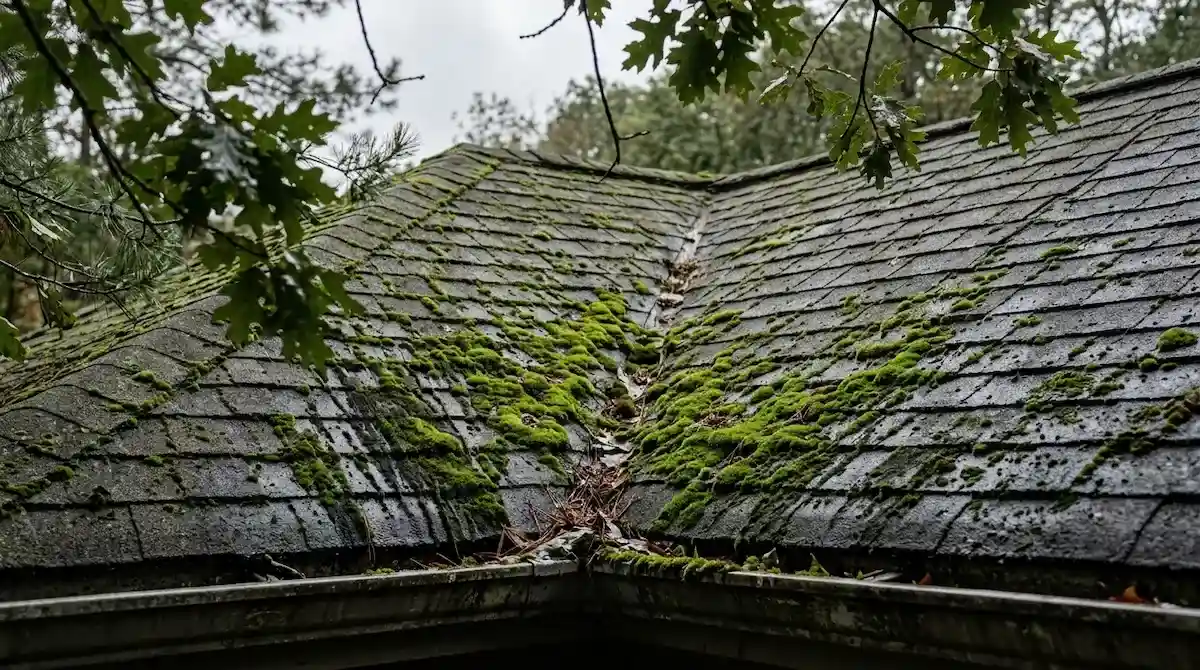
What to look for: Black or green streaking on roof surfaces, particularly on the north-facing or shaded sides of the roof. Visible green or brown moss patches, especially along roof valleys and near gutters where moisture lingers.
The fix: Professional low-pressure cleaning removes existing growth without damaging shingles or tiles. A zinc or copper treatment applied afterward creates a long-term barrier against regrowth. Trimming overhanging tree branches to increase sunlight on shaded sections is one of the most effective long-term preventions a homeowner can do without climbing on the roof.
7. Failing Underlayment on Older Pasadena Homes
A significant portion of Pasadena’s housing stock dates from the 1920s through the 1960s. That architectural heritage is part of what makes neighborhoods like Bungalow Heaven and Madison Heights so appealing. But it also means a large number of homes in the area have original roofing underlayment that is decades past its intended service life.
Underlayment is the layer between your visible roofing material and the roof deck below. It is the secondary line of defense against water intrusion. On tile roofs in particular, the tile itself may look pristine while the organic felt underlayment beneath it has become brittle, cracked, and effectively useless as a moisture barrier. When winter rains drive water beneath tile joints, there is nothing left to stop it from reaching the deck.
Following the 2025 LA fires, the California Building Code also moved more strictly toward fire-rated underlayment requirements in fire hazard severity zones. Parts of Pasadena, particularly neighborhoods north of the 210 freeway near the Angeles National Forest, now require fire-rated underlayment products during any re-roofing project.
What to look for: Underlayment failure is almost impossible to detect from outside the home. The signs show up indoors: water stains on the ceiling or drywall, musty odors in the attic, or damp insulation. A professional roof inspection with an attic check is the only reliable way to assess underlayment condition on an older home.
The fix: Replacing underlayment requires temporarily removing the surface roofing material, installing the new underlayment across the affected sections, and reinstalling the tiles or shingles. It is a significant job, but far less costly than letting the problem continue until it causes structural deck damage or interior mold remediation.
8. Gutter Problems That Damage Roofing Over Time
Gutters are not part of the roof itself, but failing gutters in Pasadena are one of the most common contributors to roofing problems that homeowners do not connect to their actual cause.
When gutters clog with debris and overflow, water backs up under the edge of the roof, soaking the fascia board, the soffit, and, in some cases, the bottom edge of the roof deck itself. Pasadena’s tree-lined neighborhoods mean gutters fill quickly in fall and winter. After the heavy leaf seasons that coincide with the beginning of the rainy period, gutters that have not been cleared can overflow on the first significant rain of the season.
Overflowing gutters also saturate the soil directly against the foundation and can drive water up under the roof edge shingles if the overflow is significant enough. On flat-roofed sections, blocked roof drains accomplish the same result from above.
What to look for: Gutters visibly overflowing during rain. Staining on the exterior of fascia boards. Paint peeling on soffits. Pooling at the base of exterior walls after rain.
The fix: Regular gutter cleaning, at a minimum twice per year in Pasadena, before the rainy season and after peak leaf fall, is the primary prevention. Gutter guards can reduce the frequency of cleaning on heavily shaded sections. Where fascia or soffit damage has already occurred, those elements need to be replaced before the moisture issue progresses to the roof deck and framing behind them.
How Often Should Pasadena Homeowners Schedule a Roof Inspection?
At a minimum, once per year. Ideally, you want an inspection before the rainy season begins, typically in October, so any weak points can be identified and addressed before the first heavy storm puts them to the test. After any significant Santa Ana wind event, a quick visual check from the ground, followed by a professional inspection if anything looks out of place, is a smart habit.
If your home was built before 1980, or if your roof has never been inspected professionally, scheduling that first inspection now rather than waiting for a problem to announce itself through your ceiling is genuinely the most cost-effective thing you can do for your home this year.
When Repairs Make Sense and When Replacement Is the Better Call
A good rule of thumb used by roofing professionals: if repair costs will exceed 30% of the cost of a full roof replacement, and the roof is already more than 15 years old, replacement typically offers better long-term value. Repairs make strong financial sense for isolated damage on a roof that is otherwise in solid condition and well within its service life.
For tile roofs, which can last 40 to 50 years with proper maintenance, targeted repairs often make excellent sense even on older systems, provided the underlayment beneath them is also evaluated and replaced if needed. For asphalt shingle roofs approaching the 20-year mark in Pasadena’s climate, widespread granule loss or storm damage is often a good trigger to schedule a professional assessment and discuss replacement options.
You might also find these helpful:
- Top Signs Your Home Needs Immediate Roof Repair
- Roof Repair vs. Roof Replacement: How to Make the Right Decision
- How Much Does a New Roof Cost in Pasadena, CA? (2026 Pricing Guide)
Get a Free Roof Inspection in Pasadena
The team at Roof Repair Pasadena serves homeowners across Pasadena, including Linda Vista, Hastings Ranch, Bungalow Heaven, Madison Heights, Playhouse Village, and Garfield Heights. Whether you have a tile roof that has not been checked in years, a flat roof that collected standing water this past season, or shingles that are showing signs of aging, a professional inspection is the starting point for understanding exactly what your roof needs.
Call (626) 828-0782 or visit the contact page to schedule your free inspection. No pressure. No obligation. Just an honest assessment from a local team that knows Pasadena roofs.


